


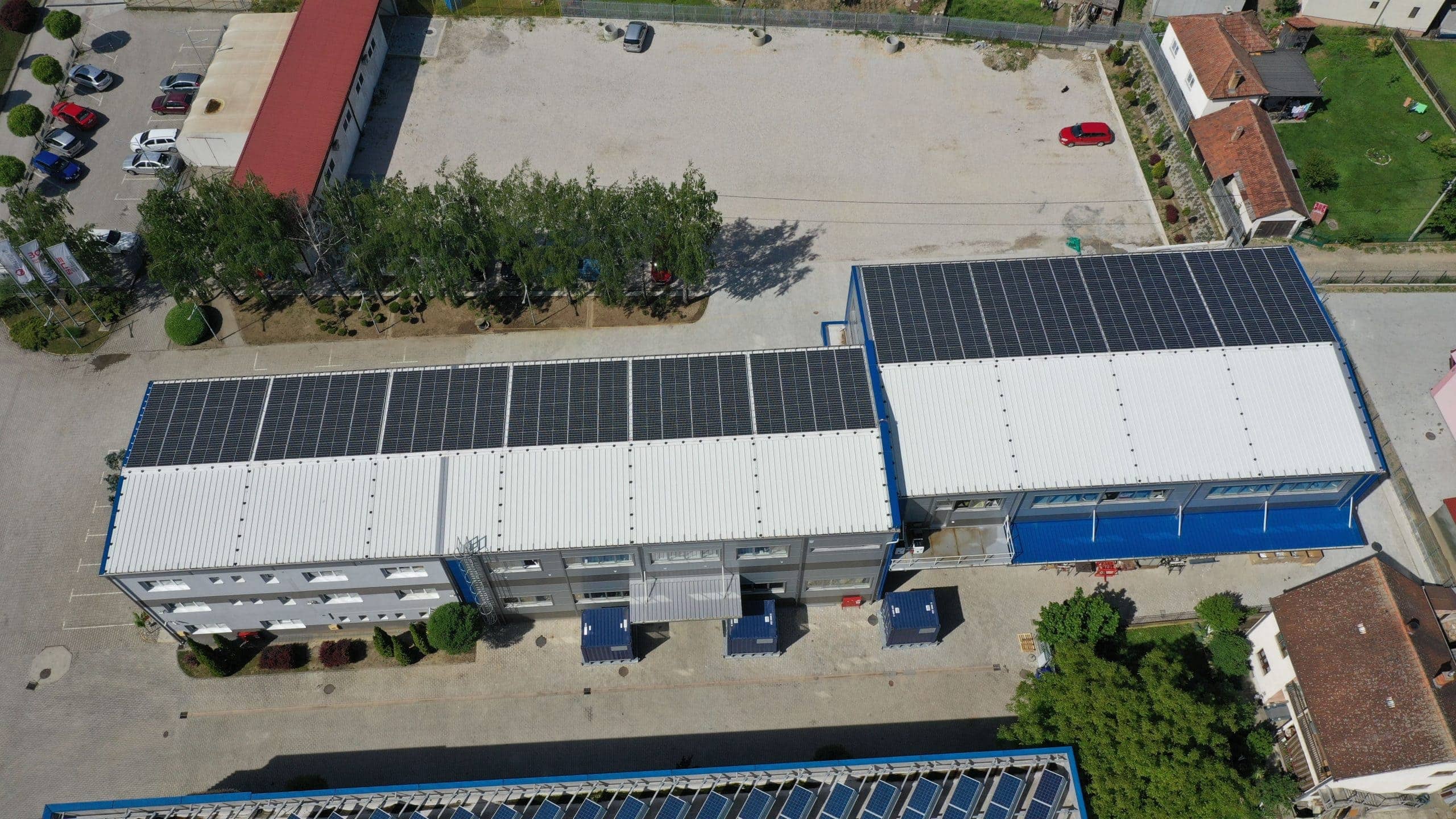
A photovoltaic power station, also known as a solar park, solar farm, or solar power plant is a large-scale photovoltaic system (PV system) designed for the supply of merchant power into the electricity grid. They are differentiated from most building-mounted and other decentralized solar power applications because they supply power at the utility level, rather than to a local user or users. The generic expression utility-scale solar is sometimes used to describe this type of project.
The solar power source is via photovoltaic modules that convert light directly to electricity. However, this differs from, and should not be confused with concentrated solar power, the other large-scale solar generation technology, which uses heat to drive a variety of conventional generator systems. Both approaches have their own advantages and disadvantages, but to date, for a variety of reasons, photovoltaic technology has seen much wider use in the field. As of 2019, concentrator systems represented about 3% of utility-scale solar power capacity.
In some countries, the nameplate capacity of photovoltaic power stations is rated in megawatt-peak (MWp), which refers to the solar array’s theoretical maximum DC power output. In other countries, the manufacturer gives the surface and the efficiency. However, Canada, Japan, Spain, and the United States often specify using the converted lower nominal power output in MWAC, a measure directly comparable to other forms of power generation. A third and less common rating is the megavolt-amperes (MVA). Most solar parks are developed at a scale of at least 1 MWp. As of 2018, the world’s largest operating photovoltaic power stations surpass 1 gigawatt. As of the end of 2019, about 9,000 plants with a combined capacity of over 220 GWAC were solar farms larger than 4 MWAC (utility scale).
Most of the existing large-scale photovoltaic power stations are owned and operated by independent power producers, but the involvement of community- and utility-owned projects is increasing. To date, almost all have been supported at least in part by regulatory incentives such as feed-in tariffs or tax credits, but as levelled costs have fallen significantly in the last decade and grid parity has been reached in an increasing number of markets, it may not be long before external incentives cease to exist.
Source link
Solar Panels aka Photovoltaic Modules


